

It’s easy to forget just how important labels are! At first, we might be attracted to a product’s appearance, then take a moment to read the description and check out details like how to use it or what it’s made of to see if it’s right for us. We do this almost without thinking. But, when it’s time to market a product or add all that necessary legal stuff, figuring out how to plan, create, and make labels that work well can get tricky.
What’s the purpose of a label?
Labels come in all sorts of shapes, sizes, and styles, which can make picking the right one a bit of a challenge. But once you break it down, labels really have 5 main jobs: informative labels give you the essential details about a product; technical labels withstand harsh environments; descriptive labels tell you what the product is like and how to use it; grade labels show you the quality or standard; and brand labels flaunt the brand’s identity to boost recognition.
#1 Informative labels
Informative labels might seem a bit plain and easy to overlook, but they serve a crucial role and provide a golden opportunity to teach and keep consumers safe by clearly sharing key details about the product.
These labels are not just obligatory; they ensure every essential legal and compliance-related detail is transparently communicated, whether on the product itself, its packaging, or both. Far from being a mere formality, these requirements are vital to product safety and consumer trust. Where compliance information is minimal, seize the chance to unleash your creative spirit and enhance label design. For those products requiring detailed labelling, utilise every inch of space to reinforce your commitment to transparency and integrity.
#2 Technical labels
Technical labels are robust, industrial-grade solutions crafted to endure extreme environments, including high temperatures, chemical exposure, and severe weather conditions. They, like informative labels, are essential for conveying specific instructions, safety guidelines, or tracking information while maintaining legibility and integrity over time.
It’s crucial to focus on the label’s practicality and performance, even during the proofing stage, as labels may appear suitable but fail once subjected to their intended environment. The effectiveness of technical labels hinges on designing them specifically for their intended application rather than adapting existing designs. This could involve choosing polycarbonate labels for durability, mark-resistant PVC for handling, custom-shaped labels for intricate products, or roll labels for streamlined application.
Additionally, deciding between removable and permanent adhesives depends on the duration for which the information needs to remain. The optimal solution isn’t necessarily the most expensive one; it’s the one that thoroughly meets the task requirements.
#3 Descriptive labels
Effective communication depends greatly on your skill to describe your product in an engaging and vivid manner, which can make it challenging given many product label’s lack of space. This section should be utilised to create compelling and persuasive messages that emphasise your product’s unique benefits. Put an emphasis on clearly explaining its features and how it works using clear, concise design.
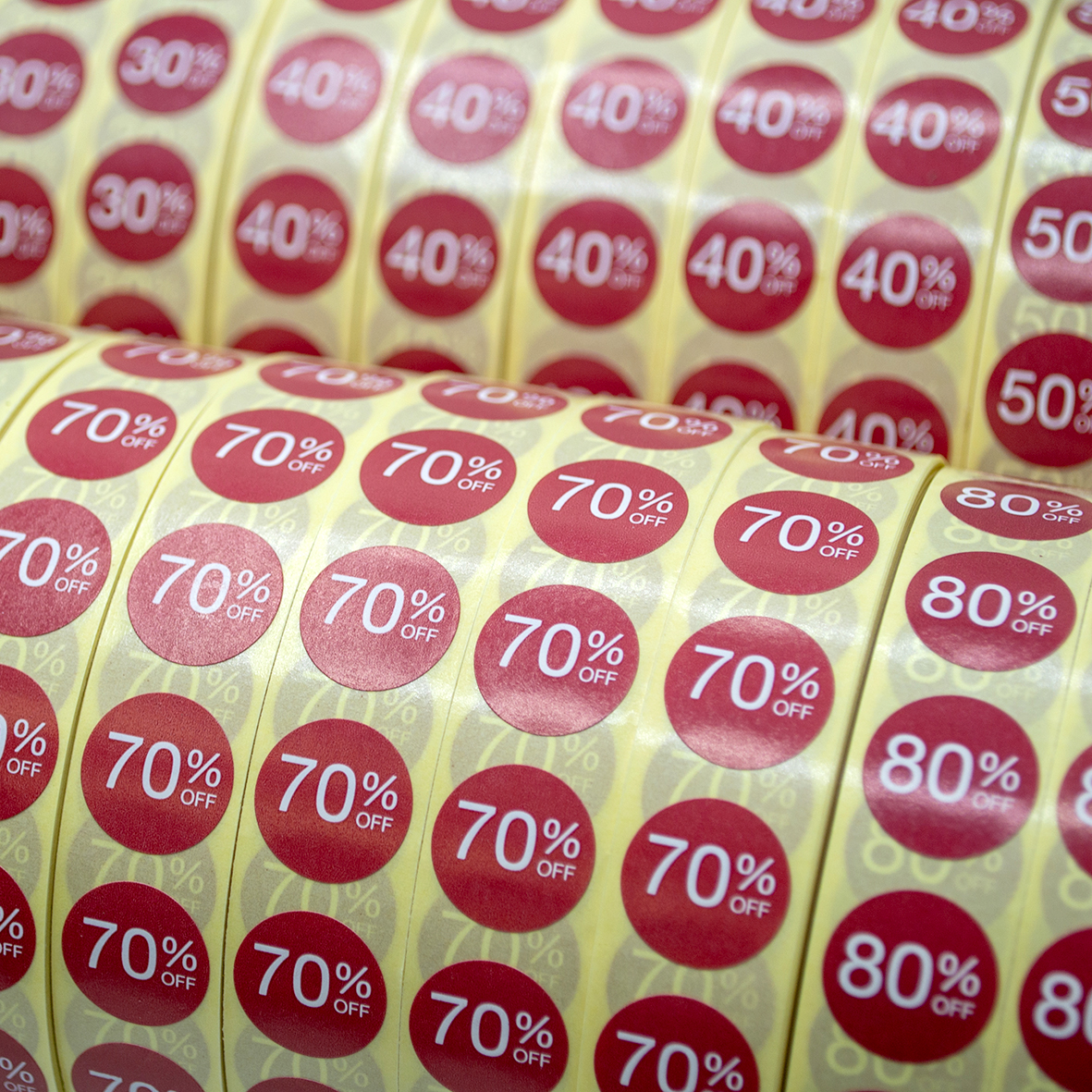
Once you have successfully sparked the customer’s interest, a good descriptive label should effectively persuade them to go ahead and make the purchase. A descriptive label doesn’t need to be complicated either, it can be as simple as one that catches a customer’s eye with offers like “buy one, get one free” or “50% off,” giving them a great reason to make a purchase.
#4 Grade labels
Grade labels are like friendly little guides that grab our attention, whether they’re about the nutrition score on our snacks or the quality mark on other products. These labels can inform us about all sorts of important things – like whether there are any irritants or pollutants, or if the product meets certain certified grades for our peace of mind. Often, these labels are required by law, but they’re also handy extras, giving us a quick and easy way to judge a product’s overall quality at a glance. This way, we can confidently decide if something suits our needs and preferences.
#5 Brand labels
Brand labels are considered the most dynamic and engaging of the labelling world. They provide a unique opportunity to showcase our brand identity to its fullest potential. With brand labels, we can exercise creativity and innovation, playing around with various design elements to make a significant impact.
Since first impressions are critical, every aspect of the label design should be meticulously thought out to enhance the brand’s visual and tactile appeal. This includes careful selection of materials, textures, and boundaries. Each detail should be aligned with the brand’s personality and message. It’s essential that these elements work harmoniously to attract potential customers, compelling them to pause, approach, and physically interact with the product. By doing so, the label doesn’t just represent the brand; it resonates with it, raising the standards and making a memorable impression that encourages consumer engagement.
We’re here to help, so feel free to reach out if you’re curious or unsure about anything related to labelling – whether it’s about materials, placement, or purpose. We’re more than happy to guide you in the right direction!


