

Most issues with technical labels come down to one thing, they were chosen for how they look, not for what they need to handle. A label can look perfect at proof stage and still fail once it is exposed to heat, moisture, cleaning chemicals or constant handling.
The right choice depends on the job. Not just what the label says, but where it lives, how long it needs to last, and what could go wrong if it doesn’t.
Start with the environment, not the design
Before getting into materials or finishes, it helps to think about how the label will actually be used.
Machine labels and overlay labels, for example, often need to stay readable for years while being touched, wiped and exposed to friction. Labels on rolls might be needed where speed and consistency matter in production. Bottle labels need to cope with condensation and cold storage, and freezable labels take that even further.
This is why technical labels are rarely interchangeable. A label designed for packaging will not necessarily hold up on equipment, and vice versa.
Material choice drives performance
Different materials solve different problems, and this is where most of the decision making sits.
PVC labels are a common option for general use, especially where flexibility matters. If scuffing is a concern, mark resist PVC labels offer better protection against everyday wear.
Polyprop labels are lighter and often used for packaging or product identification where the environment is less demanding. Vinyl labels are more adaptable, particularly for curved surfaces or outdoor use, and are often used for large format labels where flexibility is needed.
For more demanding applications, polycarbonate labels and lexan labels are a stronger option. These are typically used for control panels, branded overlays and situations where the label needs to stay intact and legible over time. Aluminium labels sit at the more permanent end, often used for asset plates or serial information where durability and a more rigid finish are needed.
If you are working through options, looking at existing stickers and labels can help frame what is realistic for your use case.
Finishes affect usability, not just appearance
Finishes are not just about how a label looks. They affect how it performs day to day.
A gloss surface can make colours sharper but can also create glare under strong lighting. A matt finish can improve readability on equipment. Laminates and coatings add protection, helping labels resist scratching, fading and general wear.
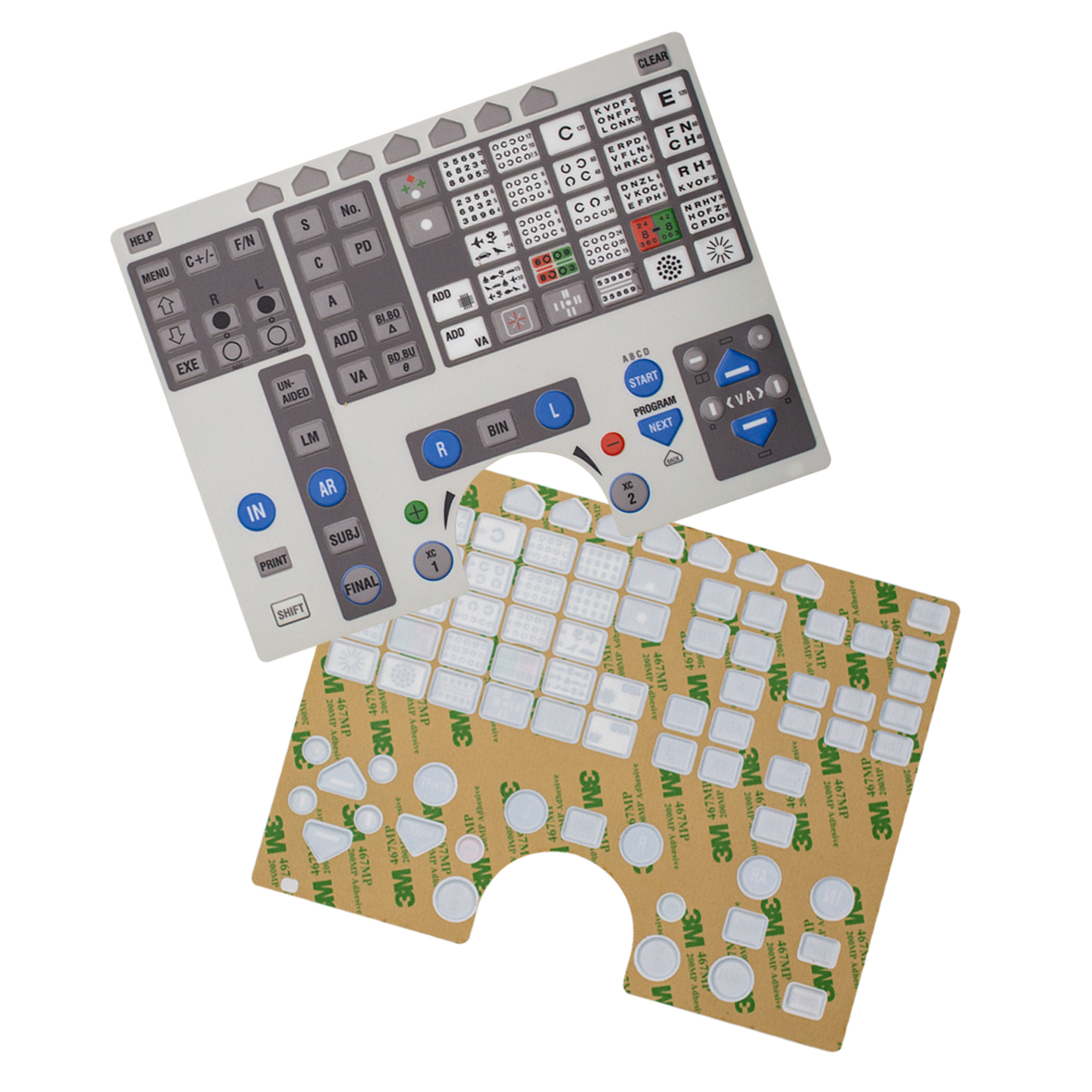
Embossed labels are useful where users need to identify buttons or sections by touch, particularly on control panels. Screen printed labels are still used where colour density and durability matter, especially in more specialist or industrial settings.
Cut to shape labels also play a practical role, allowing labels to fit around switches, edges or unusual product shapes without lifting or peeling.
Adhesives need just as much attention
It is easy to focus on the face material and overlook the adhesive, but that is often where failures happen.
Removable labels are useful for temporary use, stock control or promotions where the label needs to come off cleanly. For long term use, a permanent adhesive is usually the safer choice.
Environmental factors matter here as well. Waterproof labels need adhesives that can handle moisture and cleaning, not just a water resistant surface. Freezable labels need to hold at low temperatures, and bottle labels often need to cope with both cold storage and handling.
When conditions are tougher, details matter more
High temperature labels are designed for environments where standard materials would distort or fail. At the other end, waterproof labels are needed where moisture, washing or outdoor exposure are part of daily use.
These are usually the situations where guessing does not work. The more variables involved, the more important it is to match the specification to the real conditions.
If there is any uncertainty, it is worth getting input early. A more considered approach through something like print consultancy can prevent issues that only show up after production.
Getting it right from the start
Technical labels work best when they are specified around use, not retrofitted after design.
That might mean polycarbonate labels for durability, mark resist PVC labels for handling, cut to shape, cut-out or selective window labels for complex products or labels on rolls for efficient application. It might mean choosing between removable labels and permanent adhesives depending on how long the information needs to stay in place.
The right answer is rarely the most expensive option. It is the one that fits the job properly.
If you are working through a project and need to sense check materials or finishes, you can always speak to the team at Birch through their contact page before committing to print.


